E-mail:sales@bestchickencage.com
E-mail:sales@bestchickencage.com


Data from authoritative institutions including the Food and Agriculture Organization of the United Nations (FAO) and the Latin American Poultry Association (ALA) fully demonstrate the core advantage of battery cage: it is a standardized technical pathway for commercial layer farmers to achieve high output, optimize feed conversion ratio (FCR), and meet international food-safety standards.
Based on market observations from Taiyu Group (HK) sales and after-sales teams, Latin American poultry farming has undergone rapid industrialization and automation over the past decade.
From major markets such as Brazil, Mexico, and Colombia to fast-growing agricultural markets including Peru, Argentina, Chile, Ecuador, and Guatemala, the sector is accelerating its upgrade.
This transformation is driven mainly by sustained growth in egg consumption, increasingly strict national biosecurity regulations, and rising land and labor costs.
Traditional floor-raising systems are gradually losing market competitiveness.
| Comparison Dimension | Traditional Floor-Raising System | Automated Battery Cage System | Commercial Advantage |
| Laying rate | 75%–85% | 95%–98% | Maintains consistently high egg output |
| Egg breakage rate | 5%–8% or above | Below 1.2%–1.5% | Reduces tens of thousands of egg losses annually |
| Stocking density | 5–6 birds/m² | 20–25 birds/m² | Increases capacity by more than 300% on the same land area |
| Labor requirement | 1 worker per 800 birds | 1 worker per 10,000+ birds | Cuts daily labor cost by up to 75% |
| Flock mortality | 8%–12% | Below 2% | Separates birds from manure and reduces medication cost |
Clients: Rising worker wages across Latin America, especially in Brazil, Mexico, and Chile, are squeezing my farm profits. Compared with manual floor raising, what is the core advantage of battery cage systems?
Taiyu Group (HK): The core advantage of battery cage systems lies in operational predictability and major labor-cost reduction. Are you tired of high labor expenses, broken eggs, and inefficient, uncontrollable manual egg collection?
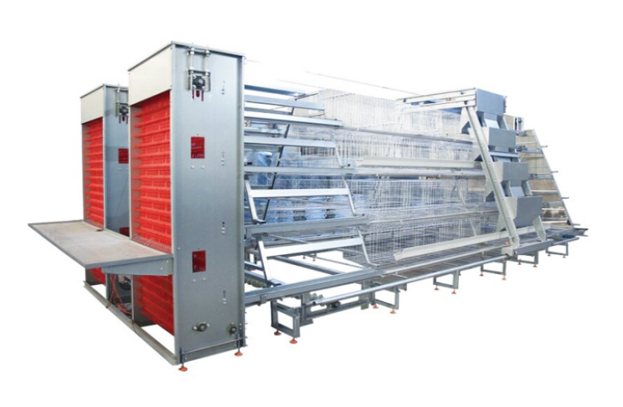
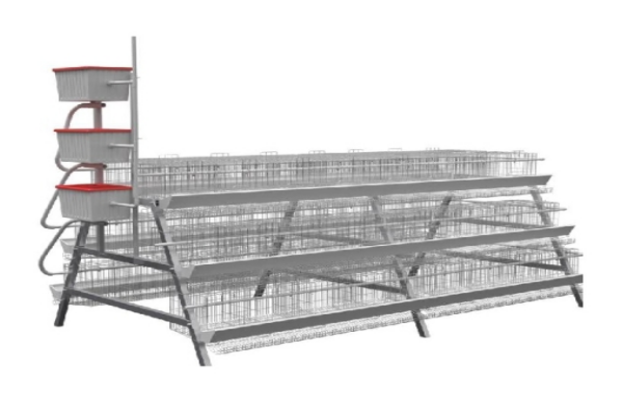
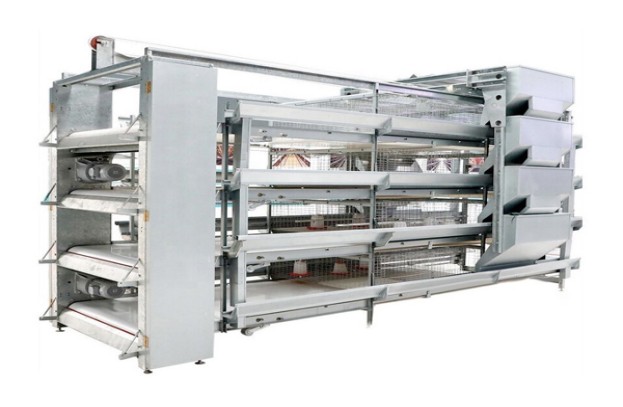
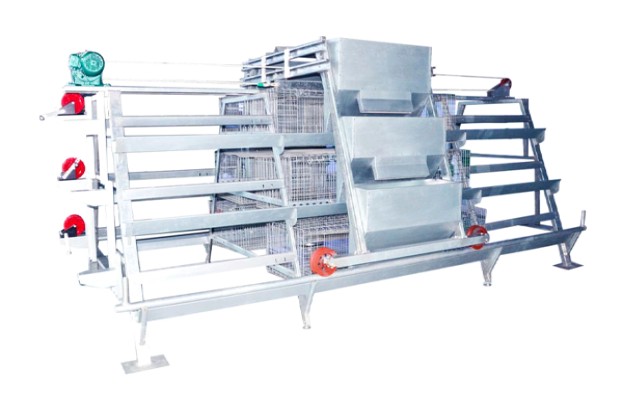
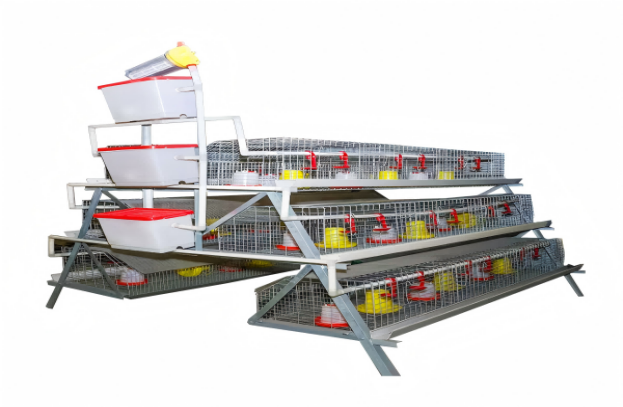
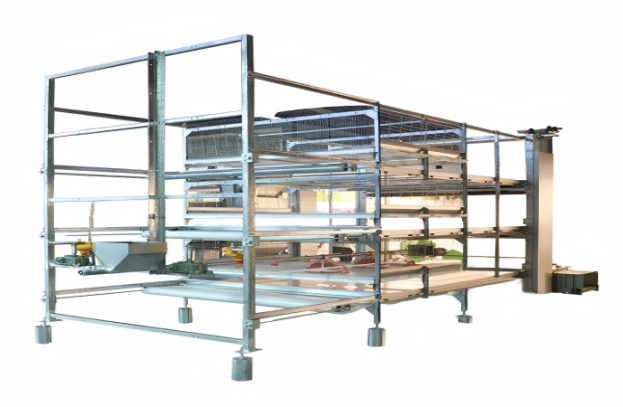
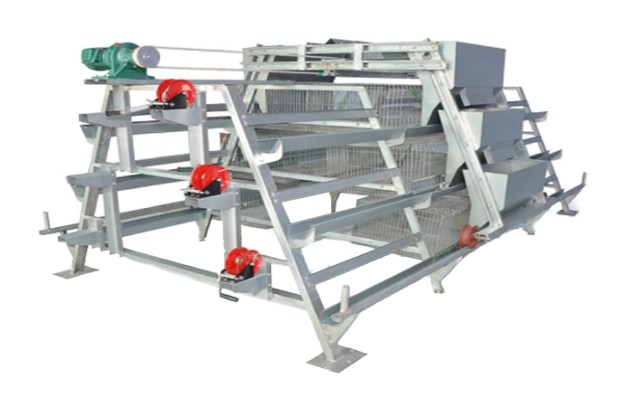
Check the popular types of chicken battery cages for sale
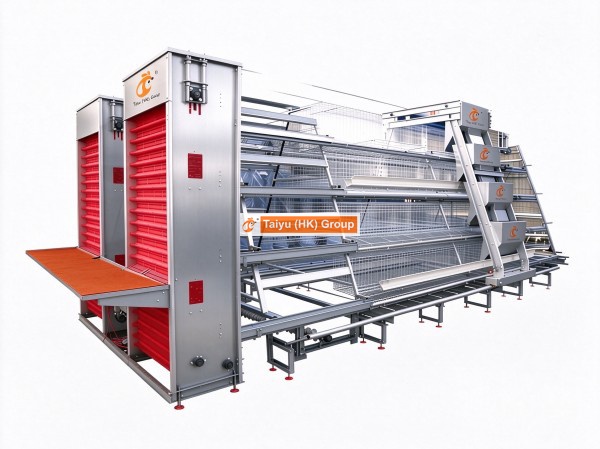
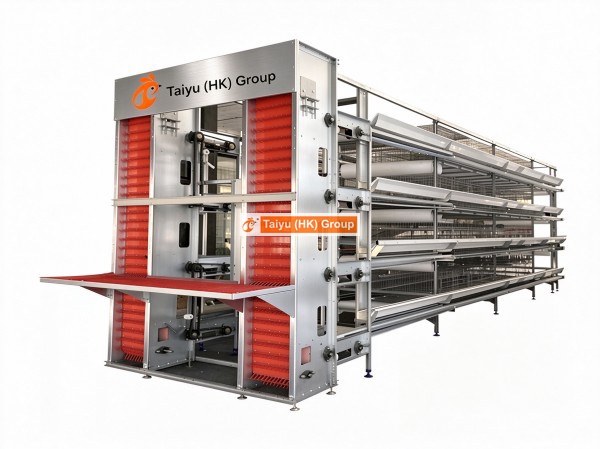
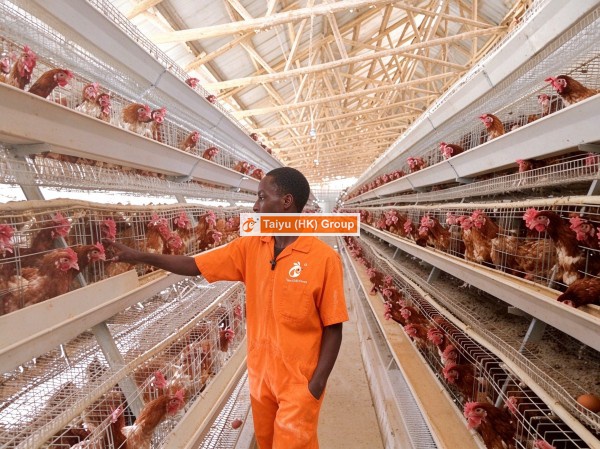
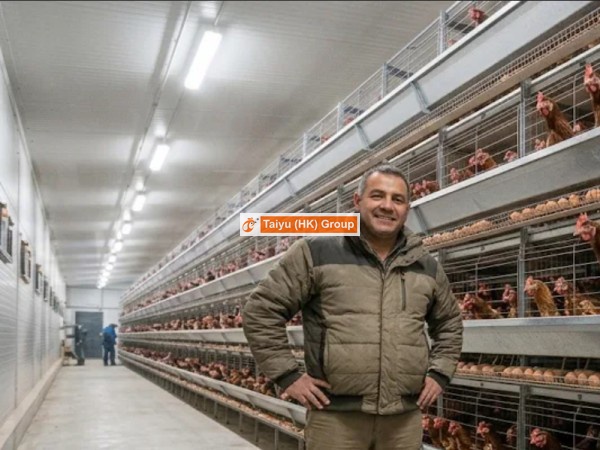
Learn More About Southeast Asia
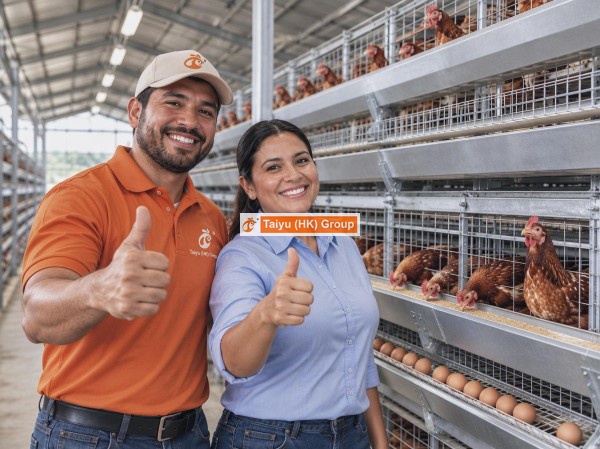
Learn More About Latin America
Before selecting equipment, Latin American producers should understand the differences between floor raising, cage raising, and free-range systems.
Each model requires a different house structure, equipment configuration, and management approach.
| Housing System | Typical Density | Main Equipment | Management Requirement | Suitable Farm Type |
| Floor raising | 5–6 birds/m² | Manual feeders, drinkers, nest boxes, litter | Frequent litter replacement and manual egg collection | Small farms with low labor cost |
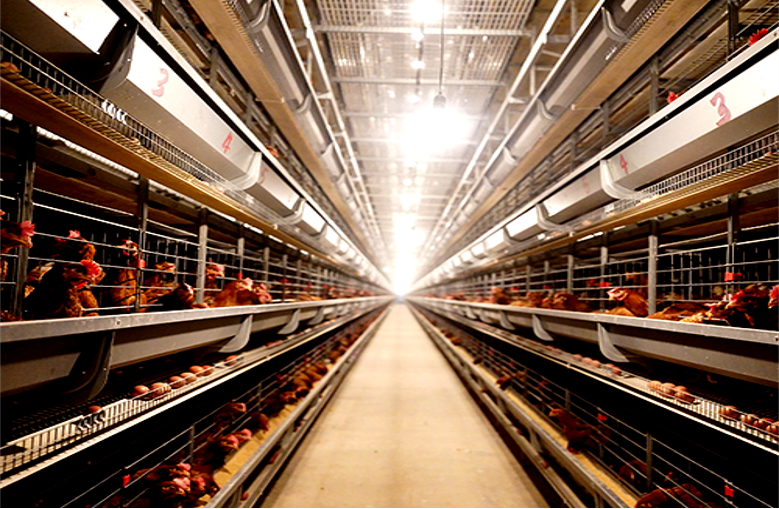
| Battery cage raising | 20–25 birds/m² | Tiered cages, automatic feeders, nipple drinkers, egg belts, manure belts | Standardized feeding, ventilation, and biosecurity procedures | Commercial and industrial farms |
| Free-range raising | 1–2 birds/m² indoors, with outdoor access | Fencing, shelters, mobile feeders, nest boxes | Larger land area, predator control, and outdoor management | Premium local egg brands |
| Aviary system | 12–18 birds/m² | Multi-level perches, nest boxes, feeders, drinkers | Higher training and management complexity | Medium-to-large welfare-oriented farms |
For commercial egg production in Latin America, cage systems provide the clearest advantage of battery cage because they combine high density, hygienic manure separation, automated collection, and scalable expansion.
Data is based on more than 20 years of after-sales follow-up records collected by Taiyu Group (HK).
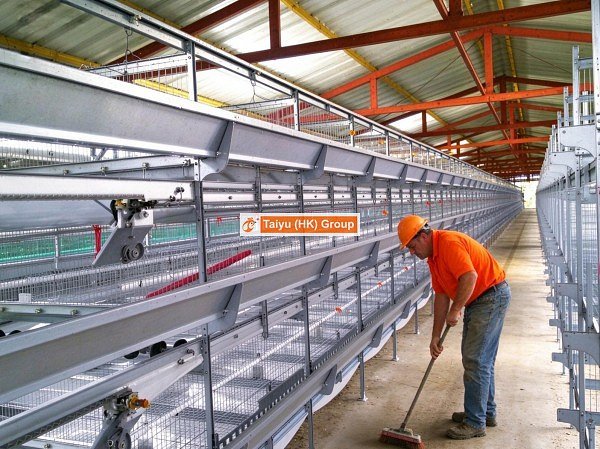
Data is for reference only.Swipe horizontally to view full table.
| House Building Area | Traditional Floor-Raising Capacity | H-Type 4-Tier Cage Capacity | Space Gain Multiple |
| 500 m² | 2,500–3,000 birds | 10,000–12,500 birds | 4.0 times |
| 1,000 m² | 5,000–6,000 birds | 20,000–25,000 birds | 4.0 times |
| 2,000 m² | 10,000–12,000 birds | 40,000–50,000 birds | 4.0 times |
| 4,000 m² | 20,000–24,000 birds | 80,000–100,000 birds | 4.0 times |
EU standard reference only.
Clients:
Land purchase near major cities in Mexico, Colombia, and Argentina is extremely expensive.
Can you explain how the space advantage of battery cage systems saves my expansion budget?
Taiyu Group (HK):
Expand upward! With a 4-tier or 5-tier H-type structure, a 1,000 m² house can house up to 25,000 birds, while traditional floor raising houses only about 5,000 birds.
Without purchasing additional land or paying corresponding land taxes, increasing capacity fourfold—is this not a highly worthwhile investment option for Latin American farms?
Data is based on more than 20 years of after-sales follow-up records collected by Taiyu Group (HK).
Data is for reference only.Swipe horizontally to view full table.
| Environmental And Geographic Challenge | Target Latin American Countries | Taiyu Group Hardware Solution | Operational Benefit |
| High temperature and high-humidity corrosion | Ecuador, Colombia, coastal Brazil | Hot-dip galvanized anti-corrosion treatment | Equipment service life of 15–20 years |
| Seismic movement risk | Chile, Peru, Bolivia | Reinforced cross-beam frame | Improves structural stability and reduces collapse risk |
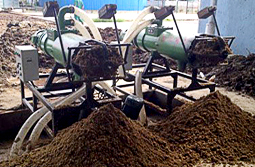
| Manure-borne pathogen transmission | Argentina, Brazil, Guatemala, Honduras | Automated PP manure belts | Reduces flock mortality to below 2% |
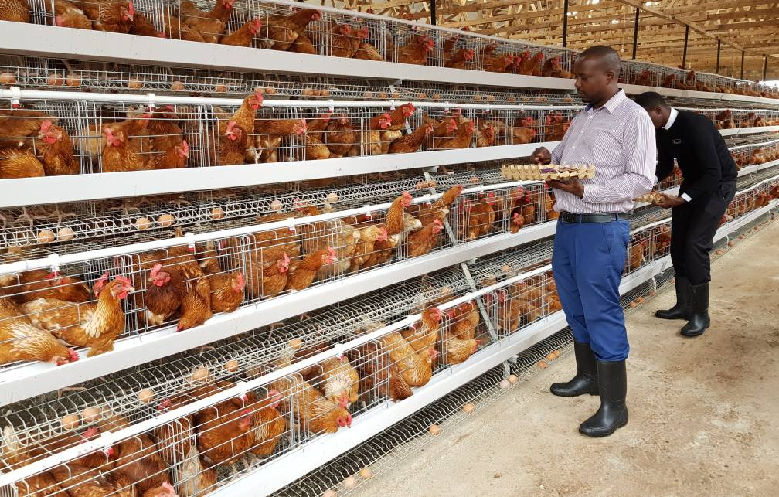
A practical example is a 50,000-bird farm in a humid coastal area. With manual litter management, daily manure removal may require 4–6 workers.
With automated PP manure belts running on a scheduled cycle, the same work can be completed by 1–2 operators, while keeping the house drier and reducing ammonia accumulation.
Clients: Farms in Chile, Peru, and Bolivia face seismic risks, while coastal areas in Colombia and Ecuador have extremely high humidity.
Is structural stability also a proven advantage of battery cage systems?
Taiyu Group (HK): Absolutely. Our cages use heavy hot-dip galvanized steel and reinforced beam frames, designed to resist regional seismic movement and coastal rust.
Can a 20-year equipment structure give you greater investment confidence in Latin America?
Data is for reference only.Swipe horizontally to view full table.
| Performance Indicator | Traditional Floor-Raising System | Automated Battery Cage System | Annual Impact For A 20,000-Bird Farm |
| Feed loss | Higher spillage and competition waste | Reduced by anti-waste trough design | Up to 50 metric tons saved |
| Egg breakage rate | Above 6% | Below 1.5% | Fewer damaged eggs and higher sellable output |
| Dirty-egg rate | Higher due to litter contact | Lower through belt collection | Better grading and packaging quality |
| Feed conversion ratio | Less controlled | More stable under standardized feeding | Lower cost per dozen eggs |
| Labor for egg collection | Manual collection required | Central conveyor collection | Reduced daily handling time |
Clients: In Latin America, feed accounts for more than 70% of my operating costs. How much feed cost can this design save for a farm in Argentina or Mexico?
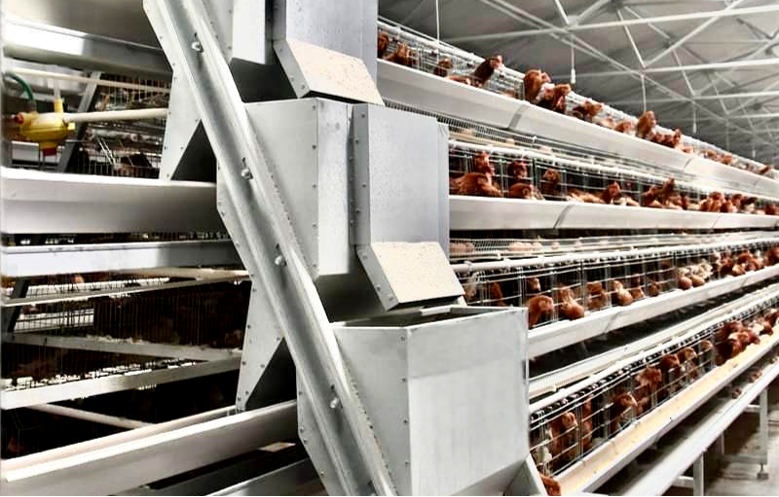
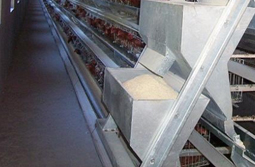
Taiyu Group (HK): Our feed-trough design prevents feed scattering and bird competition, saving up to 2.5 metric tons of feed per 1,000 layers per year.
Reducing feed waste and lowering daily procurement costs can effectively improve overall farm profit and monthly cash flow.
Data is based on more than 20 years of after-sales follow-up records collected by Taiyu Group (HK).
Based on Taiyu Group (HK) years of market experience, the core advantage of battery cage systems in commercial expansion is modular scalability.
The systems match Latin American commercial farms at different development stages, from small farmers in Guatemala or Honduras to large commercial poultry enterprises in Brazil, Mexico, and Colombia.
Data is for reference only.Swipe horizontally to view full table.
| Farm Scale Stage | Recommended Equipment Configuration | Required Labor | Core Automation Features |
| 1K–2K birds, startup stage | A-type 3-tier stepped cages, manual or semi-automatic | 1 part-time worker | Basic anti-waste feed trough, automatic nipple drinking |
| 5K–10K birds, standard stage | A-type/H-type cages plus semi-automatic feed trolley | 1–2 full-time workers | Semi-automatic gantry feed trolley, automatic manure scraper |
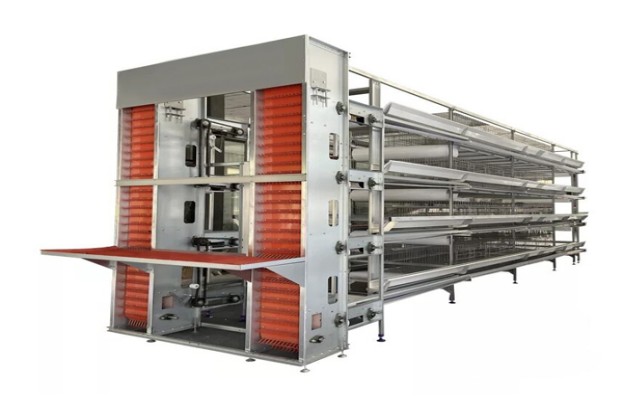
| 20K–50K birds, industrial stage | H-type 4/5-tier longitudinal cages | 2–3 full-time workers | Automatic manure belts, soft conveyor belts for automatic egg collection |
| 100K+ birds, large farming complex | Fully automatic H-type industrial system | 4–5 operators | Central egg grading, intelligent climate control, automatic feeding and manure removal |
1,000 → 2,000 Birds (Startup Stage): Startup pilot stage. An A-type 3-tier stepped cage allows one part-time worker to complete daily management.
5,000 → 10,000 Birds (Standard Commercial Farm): Standard commercial farm stage. Equipped with a semi-automatic feed trolley and automatic drinking system, only 1–2 workers are required.
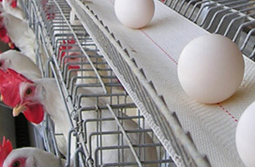
20,000 → 50,000 Birds (Industrial Farm): Large-scale industrial farm stage. Upgraded to H-type longitudinal cages with automatic manure belts and egg-collection conveyor belts, reducing labor expenditure by approximately 70%.
100,000+ Birds (Mega Poultry Complex): Industrial-grade large farming complex stage. Fully automatic environmental control and central egg-collection packaging systems allow only 4–5 operators to manage a farm with 100,000 birds.
Clients:
I want to expand my farm in Brazil, Mexico, or Colombia from 10,000 birds to more than 100,000 birds and fully use the operational advantage of battery cage systems. How many employees do I actually need?
Taiyu Group (HK):
With our fully automated H-type system, only 4–5 operators are needed to smoothly operate a 100,000-bird integrated farming complex!
By streamlining the labor team, you can effectively reduce labor expenses and improve the operating efficiency and profitability of a large farm.
Latin American investors should evaluate cage equipment not only by purchase price, but also by land savings, labor savings, egg-loss reduction, feed efficiency, and expansion flexibility.
Data is for reference only.Swipe horizontally to view full table.
| Investment Factor | Floor-Raising System | Battery Cage System | Financial Meaning |
| Land requirement for 20,000 birds | 3,300–4,000 m² | 800–1,000 m² | Lower land CAPEX |
| Labor for 20,000 birds | About 25 workers | 2–3 workers | Lower recurring payroll |
| Egg breakage | 5%–8% or above | Below 1.2%–1.5% | More sellable eggs |
| Manure management | Manual litter handling | Automated PP belt removal | Better hygiene and lower disease risk |
| Expansion method | Requires more land and buildings | Adds cage tiers or modules | Faster and more flexible scaling |
For a farm planning to expand from 10,000 to 50,000 birds, a modular H-type layout allows phased investment: start with two production lines, then add feeding, egg-collection, and manure-removal modules as cash flow improves.
This staged approach is a practical advantage of battery cage investment for growing Latin American enterprises.
Contact Taiyu Group (HK) now to obtain a customized cage layout plan and return-on-investment (ROI) quotation for your farm!
1. Global Service Network
Headquartered in Hong Kong, with branches and factories in China, Vietnam, Thailand, Nigeria, Kenya, Ethiopia, and Tanzania, providing more localized project and after-sales support.
2. International Quality Standards
Strict quality control and double inspections. Certifications and export documents include CE, SGS, ISO 9001, CCVO, PVOC, SONCAP, COC, ECTN, FORM A/F/M, and more.
3. One-to-One VIP Service
Dedicated account managers provide customized farm designs, equipment configurations, and quotations for projects ranging from 500 to 100,000+ birds per house.
4. Lifetime After-Sales Service
Installation guidance, equipment commissioning, operator training, remote technical support, spare parts supply, and ongoing maintenance.
Headquarters And Branchs
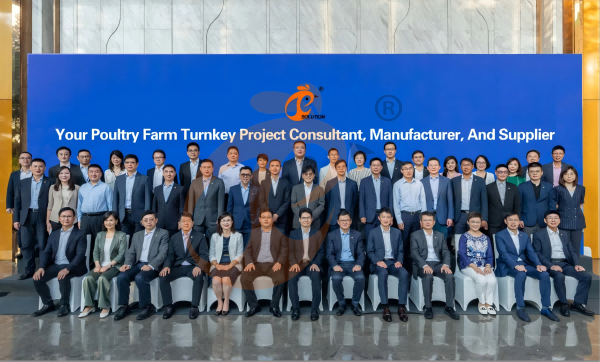
Hong Kong Headquarter Management Team
Hong Kong Headquarter Taiyu Industrial Group CO., LTD
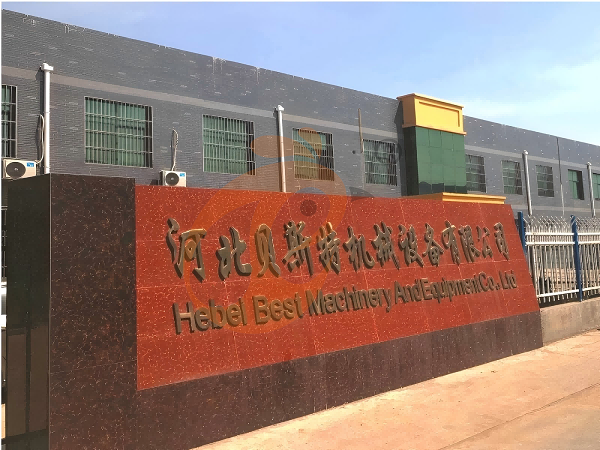
China Hebei Best Machinery And Equipment CO., LTD
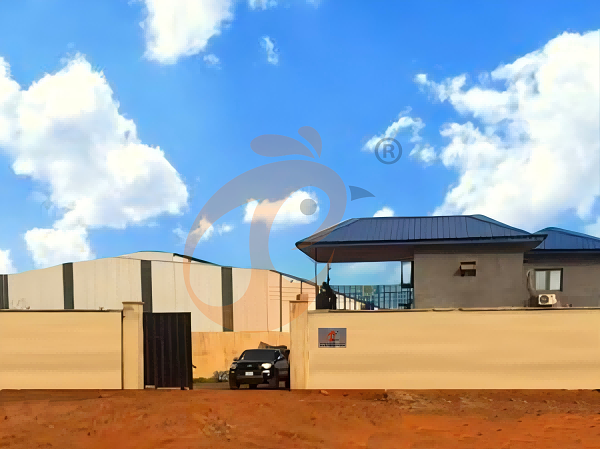
Nigeria Vanke Machinery And Equipment CO., LTD
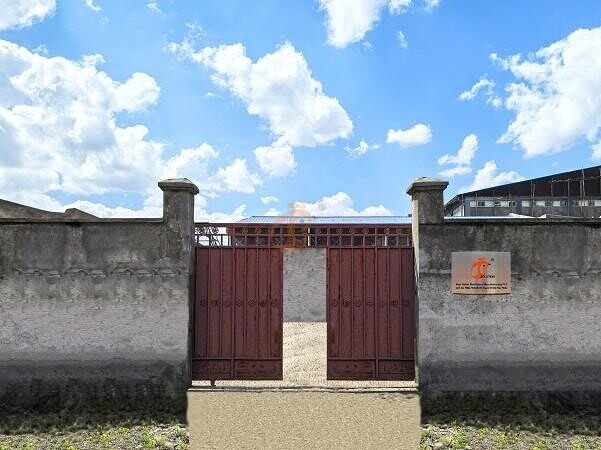
Tanzania Best Machinery And Equipment CO., LTD
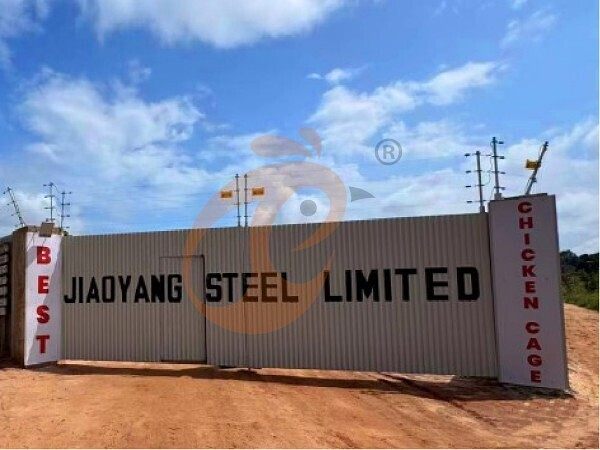
Ethiopia Best Hebei Machinery Manufacturing PLC
Reception /24 WhatsApp NO. : +8618830120193
SEND YOUR MESSAGE TO US
(* We will reply your inquiry to this Email as soon as we see it.)RECENT BOLGS
CONTACT US
HOT PRODUCTS